Header: ESA–C.Carreau

The future of gravitational wave astronomy is very exciting, with many planned projects coming into fruition over the next few years. Here we will look at three interferometers in different stages of completion: KAGRA, LIGO India and LISA
KAGRA
KAGRA is the newest Earth-based Interferometer, having finished construction in Japan in 2020. It is the first to be built underground, to reduce noise and the first to use cryogenic mirrors. LIGO, VIRGO and KAGRA will begin collaborating with the next observing run, O4, planned to begin in May 2023.
LIGO India
LIGO India is a further interferometer in the planning stage and is a collaboration between LIGO, the Raja Ramanna Center for Advanced Technology in Indore, the Institute for Plasma Research in Ahmedabad, and the Inter-University Centre for Astronomy and Astrophysics in Pune.
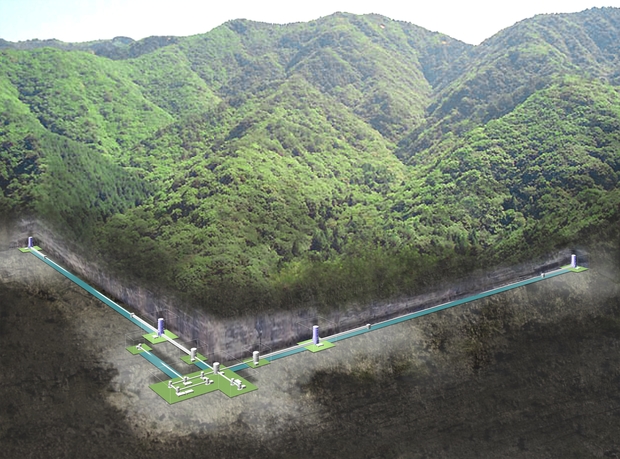
Photo: ICRR, Univ. of Tokyo

LISA
Conquering the Final Frontier
As we’ve seen, noise from sources such as humans and seismic activity greatly impact our ability to detect gravitational waves, huge amounts of work at LIGO is done just to find ways of reducing this background. But what better way to remove the human or seismic element than to send an Interferometer into space!
This might sound ridiculous, of course sending a concrete structure made of 4 km long arms into space would be ridiculous but the people at ESA and NASA have come up with an ingenious solution.
Introducing LISA
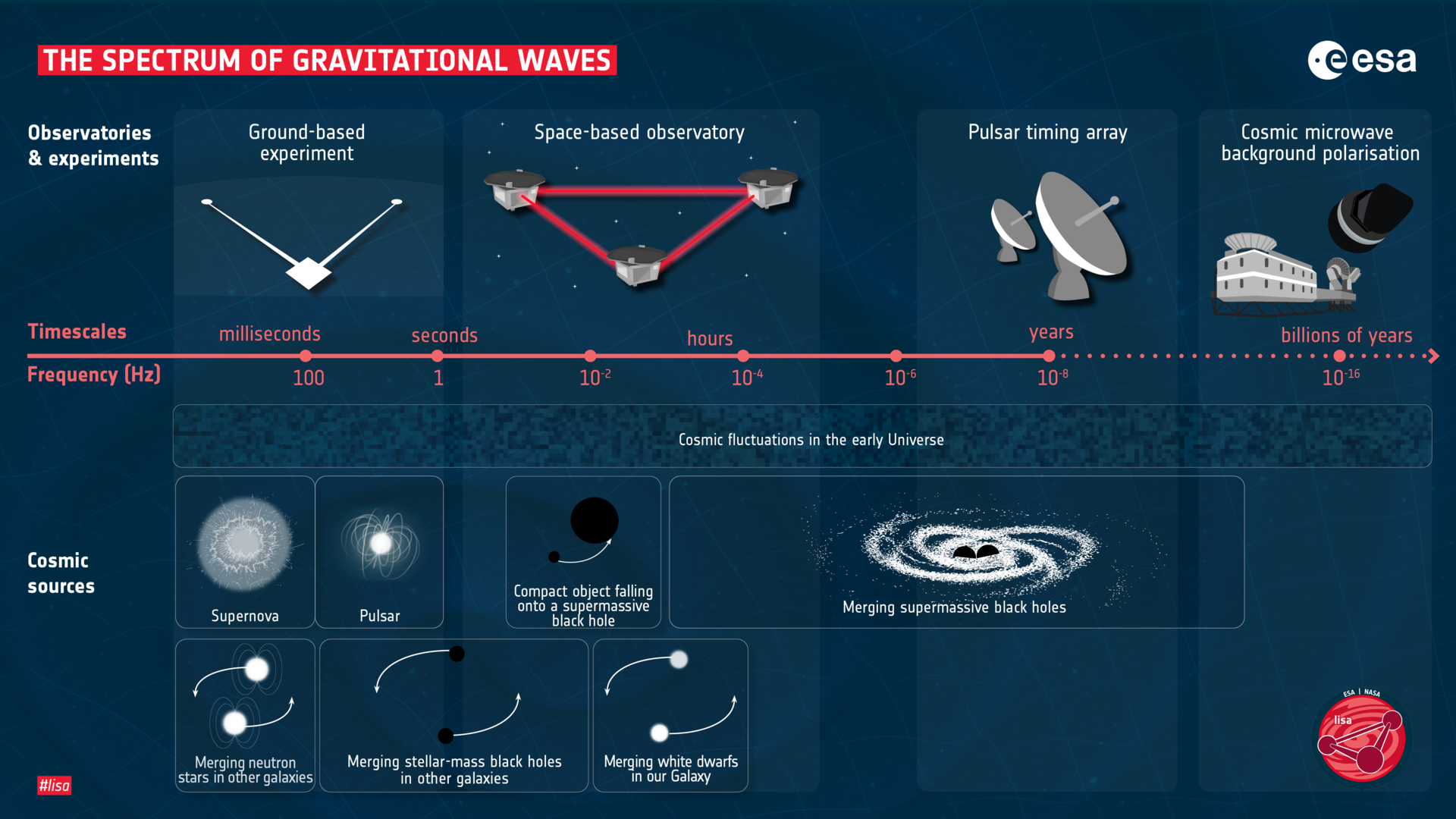
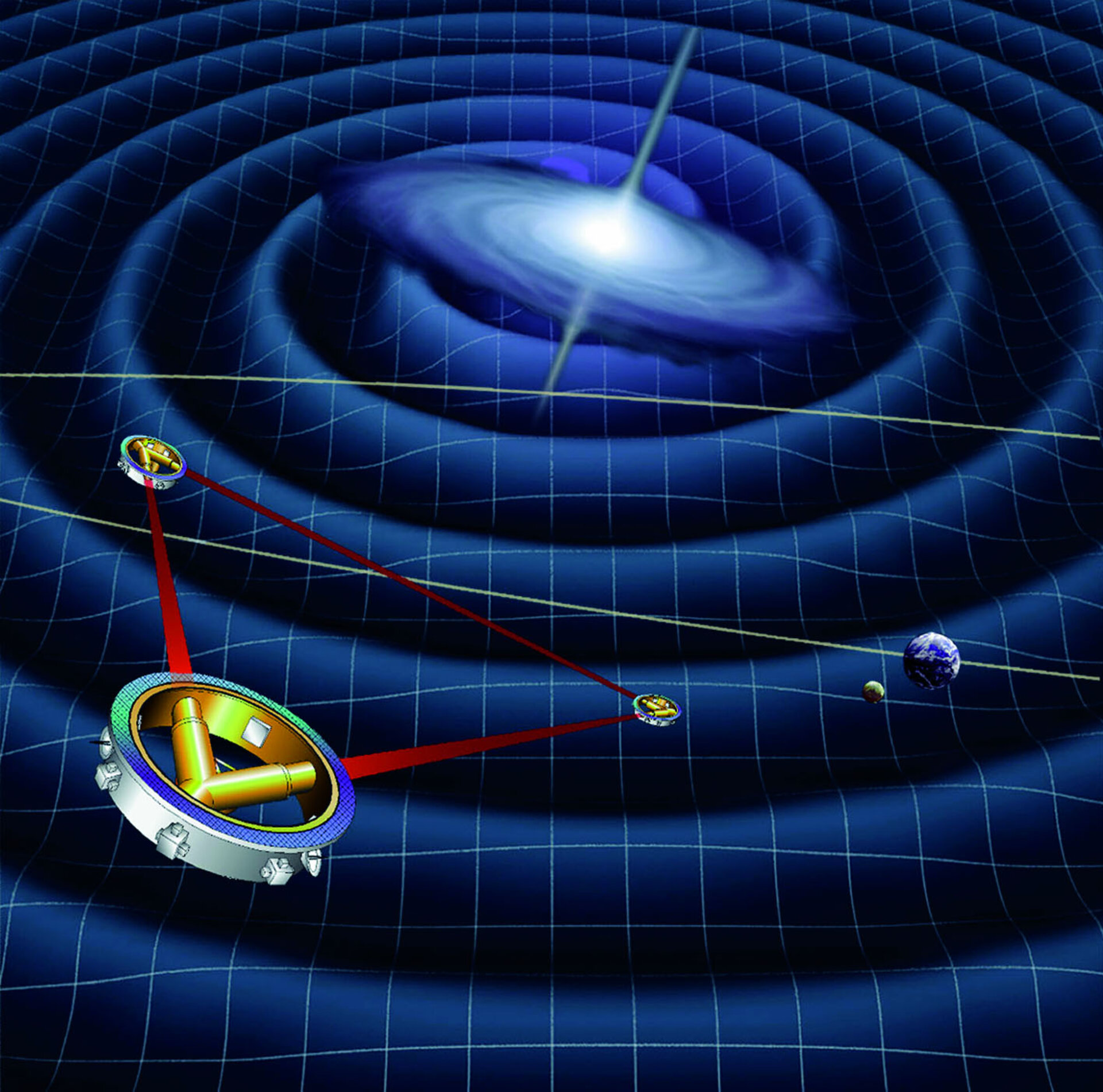
LISA, standing for the Laser Interferometer Space Antenna, will be made of three satellites, arranged millions of miles apart, in a triangle and will follow the orbit the earth around the sun. The satellites will send lasers to each other, measuring differences in the way any received light interferes, much like what is already being done down on Earth in LIGO and VIRGO. LISA will be able to detect gravitational waves at much lower frequencies than is currently possible, potentially created by heavier objects than we are able to detect now.
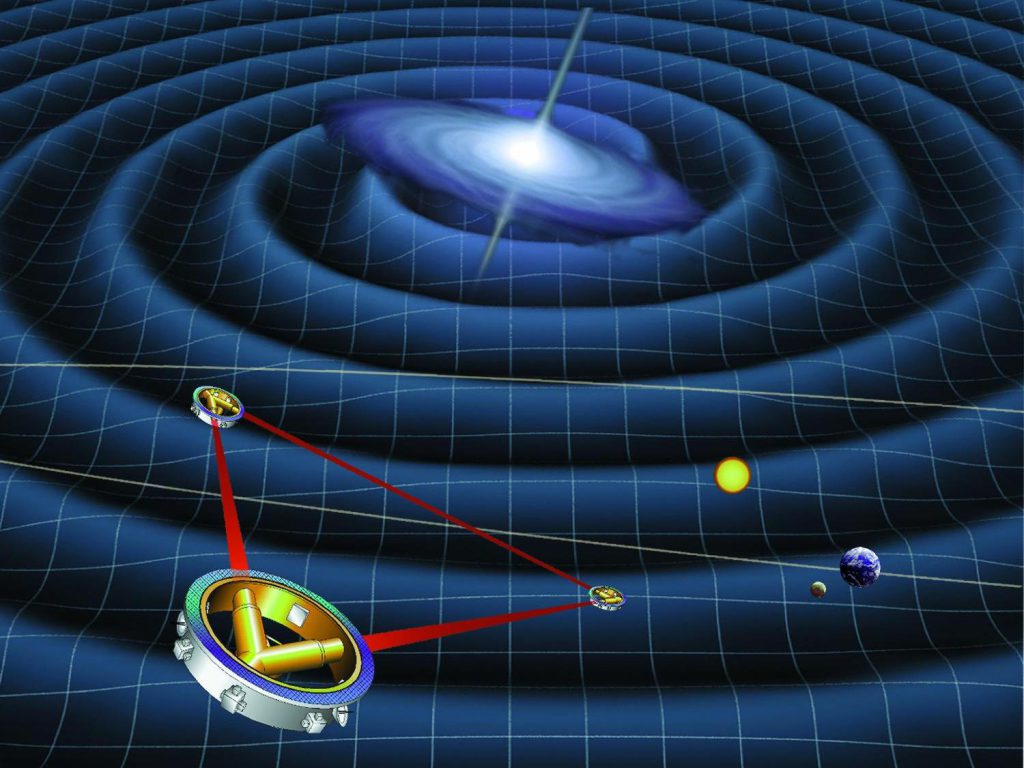
Photo: ESA
Paving the Way – LISA Pathfinder
Before LISA could even begin development, the concept that noise would be significantly reduced had to be tested. For all we knew, there could be another significant source of noise in space, much louder than any signals. Launched in 2015, LISA Pathfinder did exactly this, testing that the level of noise in space was quiet enough that it was worth continuing LISA’s mission. For a period of two years, LISA Pathfinder monitored background noise, finding the levels to be ~100 times smaller than what we expected them to be! The mission was a brilliant success, and has paved the way for LISA’s launch, currently planned to be happening in the 2030s.
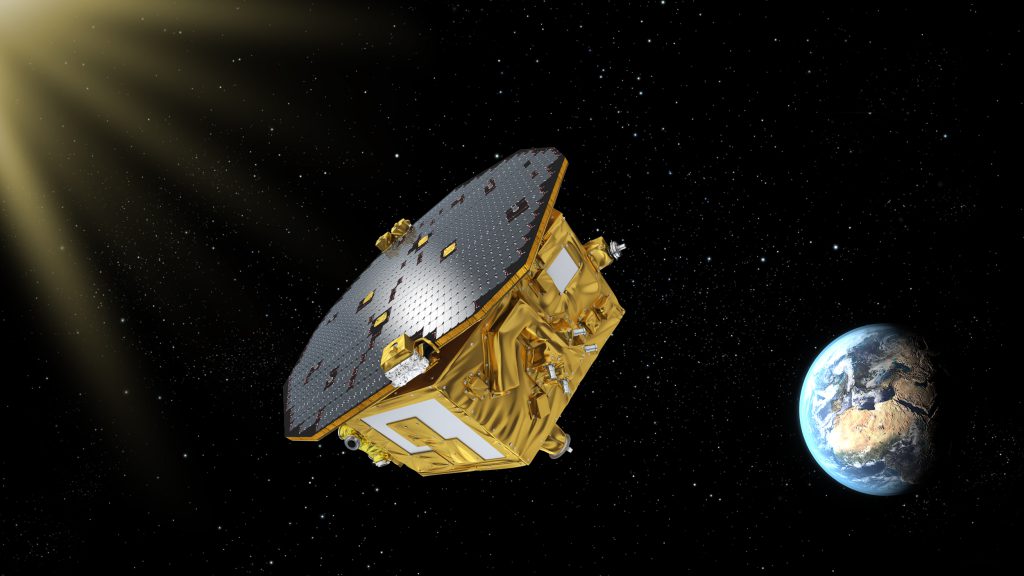
Photo: ESA–C.Carreau
What does this mean for the future?
The launch of LISA will revolutionise the field of gravitational wave astronomy. We will be able to uncover a new section of the gravitational wave spectrum previously inaccessible to us, enabling observations of supermassive (millions to billions times the mass of our sun) black holes and ultra compact binaries (binaries with very small orbit radii).
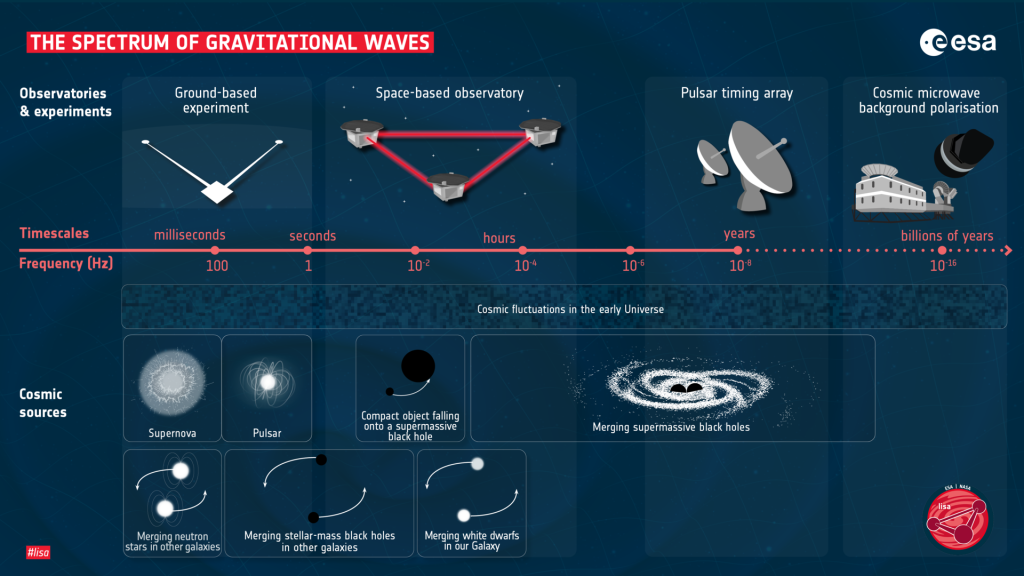
Photo: ESA